SEO reporting is the process of gathering and analyzing data to tell the story of your search engine performance. At its core, it's about translating complex metrics into a clear narrative that shows what’s working, what isn’t, and where you should focus next to rank your business higher and attract more customers from search engines.
What Is SEO Reporting Really About?
Let's ditch the textbook definition. Stop thinking of an SEO report as a boring data dump. Instead, picture it as the GPS for your business's online journey. It’s a strategic tool that tells a story, showing where you've been, where you are now, and the best route to your destination—which, for most businesses, is more customers and revenue. A good report helps you understand the "why" behind the numbers so you can make smarter decisions to rank your business.
This mindset shift helps business owners see reports as tools to:
- Pinpoint clear wins and tell the story of what's working.
- Spot potential roadblocks before they become major issues.
- Make sure every marketing dollar drives real growth, not just vanity metrics.
From Data Points to Business Decisions
Solid SEO reporting connects your online activities to your bottom line. It's built to answer the questions that actually matter, like, "Are we ranking for keywords that attract the right customers?" or "Which of our services get the most attention on Google?" It’s all about turning numbers into a story you can act on.
For a local plumber (GEO or Geographic SEO), this means seeing how many phone calls came from people who searched "emergency plumber near me." For an e-commerce shop, it’s knowing which product pages are bringing in sales from organic search. This focus on outcomes is what separates a report that helps you rank and grow from one that just collects digital dust.
SEO reporting is the bridge between your marketing activities and your business goals. It’s the proof that your investment is generating a return, turning abstract concepts like "rankings" into tangible results like leads and sales.
The infographic below shows just how important search visibility is. It’s not just about being on the first page; it's about grabbing those top spots where all the action happens.
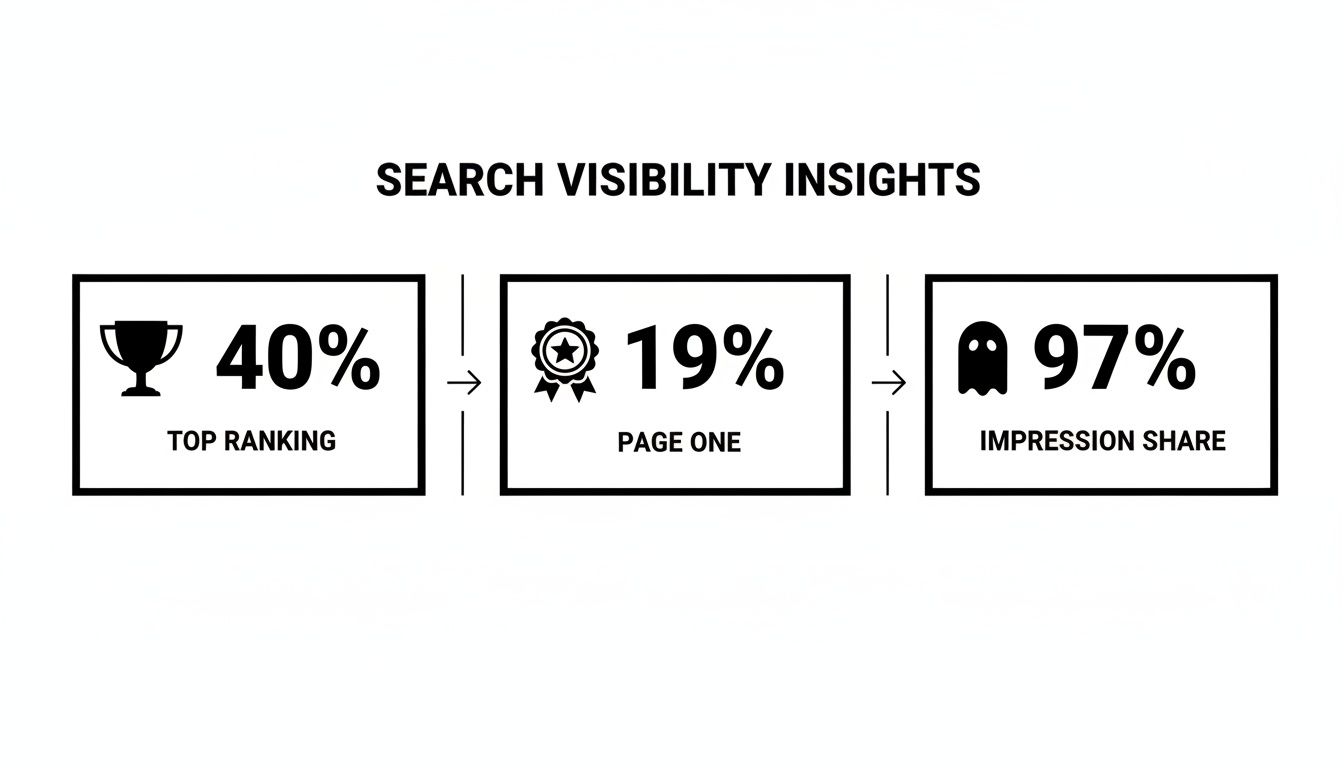
As you can see, the top positions get the lion's share of attention and clicks. Just showing up on page one isn't good enough anymore.
The real challenge? A staggering 96.55% of pages get zero search traffic from Google. This makes it absolutely essential for reports to tell you which pages are actually pulling their weight. For local service providers—think plumbers, dentists, and roofers—this data is even more critical, especially since 46% of all Google searches have local intent. Our approach at Jackson Digital is to focus on these actionable metrics, making sure you understand not just where you rank, but whether those rankings are turning into qualified leads and sales. If you want to dive deeper, you can explore more SEO statistics to see just how these trends play out.
Building Blocks of a Powerful SEO Report

A great SEO report isn't a fifty-page monster crammed with charts nobody understands. The most effective reports are built on a handful of essential parts that tell a clear, simple story about your business's growth. Think of them as the chapters in the story of how you rank and attract customers online.
These building blocks work together to paint the full picture, showing real business impact instead of just a bunch of numbers.
Organic Traffic: Your Digital Foot Traffic
Organic traffic is the number of visitors who find your website through a search engine like Google—without clicking on a paid ad. It’s the digital version of people walking into your store because they saw your sign down the street.
This number is a huge deal because it measures genuine interest. These are potential customers actively looking for the exact solutions you offer. An increase in organic traffic tells a positive story: your efforts to rank your business are making you more visible to the right people. For a local roofer, this metric tells you if more homeowners in your service area are actually finding you online.
A healthy stream of organic traffic means your brand is earning its spot in front of customers. It’s a direct measure of your website's authority and relevance in the eyes of search engines.
A powerful SEO report doesn't just present data; it tells a story that inspires action. To see how to turn metrics into a real growth strategy, check out this better SEO monthly reporting format.
Keyword Performance: Your Shelf Placement
If your website is your store, keywords are the signs on each aisle telling customers what you sell. Keyword performance tracks how well your site ranks for the specific phrases and terms your ideal customers are typing into Google.
For instance, an e-commerce brand selling running shoes wants to rank for "best trail running shoes for beginners." A high ranking for that keyword is like having your product at eye-level on the main aisle—it gets seen first and grabs the most attention. Tracking these rankings tells the story of whether you’re capturing that valuable digital shelf space and winning against competitors.
Backlink Health: Your Online Reputation
Backlinks are links from other websites pointing to yours. Think of them as professional endorsements or referrals. When a reputable site links to your content, it’s like they’re vouching for your expertise and trustworthiness, which is a powerful signal to search engines.
A strong backlink profile tells a story of authority and boosts your ability to rank. A solid SEO report should always track:
- New Backlinks Gained: This shows your reputation is growing.
- Lost Backlinks: Helps you spot potential problems with your online authority.
- Referring Domains: The number of unique websites linking to you, which points to a diverse and strong reputation.
This part of your report is basically tracking your brand’s word-of-mouth reputation across the internet.
Technical SEO: Your Storefront’s Foundation
Technical SEO is the foundation of your digital storefront. It’s all about making sure your website is built in a way that search engines can easily crawl, understand, and rank. If the foundation is cracked, it doesn't matter how great your products are—search engines and customers will struggle to find you.
Key technical elements to watch include:
- Page Speed: How quickly your pages load. Nobody likes a slow website.
- Mobile-Friendliness: How well your site works on smartphones and tablets.
- Crawl Errors: Any roadblocks search engines hit when trying to read your site.
A solid technical foundation is the untold story behind great rankings and a smooth user experience. If you're not sure about your website's current technical health, running a few digital marketing audits is a great place to start.
How to Measure Real SEO ROI in Your Industry

This is where the rubber meets the road. All the traffic and rankings in the world mean nothing if they don’t actually grow your business. Answering the big question, "Is my investment actually paying off?" means you have to tell a story that connects website metrics to real-world financial results.
A solid SEO report provides a clear framework for calculating your Return on Investment (ROI). It’s not just about watching numbers go up; it's about knowing what each new lead or sale is truly worth and what it cost to get it. This is how you can confidently see the financial impact of your SEO work and make smart calls about your marketing budget.
Setting Realistic Industry Expectations
SEO ROI isn't a one-size-fits-all number. A local plumbing contractor might see a fast return from ranking for "emergency plumbing services," but a medical device company targeting a national audience will have a much longer road. Your industry, sales cycle, and customer lifetime value all play a huge role in what a "good" return looks like and how long it takes to see it.
For instance, research shows that timelines and returns vary wildly across different sectors. The Construction industry often breaks even the fastest, at just 5 months, while the Medical Device sector might take 13 months to hit that same milestone. Knowing this helps you tell the right story and set proper expectations for your specific market.
From Clicks to Conversions That Matter
To measure real ROI, you have to track the actions that directly lead to money in the bank. Forget the vanity metrics. You need to focus on tangible conversions that show a potential customer is moving closer to making a purchase.
Your SEO report should tell a financial story. The main characters are your conversion rates, the plot is your customer’s journey, and the ending is your return on investment. If the story isn't clear, the report isn’t working.
For a local service business (GEO), that means you're tracking things like:
- Qualified Phone Calls: How many valuable calls came straight from an organic search?
- Form Submissions: How many people filled out your "Request a Quote" form?
- Service Page Engagement: Are people actually looking at the pages for your most profitable services?
These are the metrics that draw a direct line between your search visibility and new business. To keep this process straightforward and present your findings clearly, using a good SEO monthly report template can help you show real value to your team or clients.
From there, you can even take it a step further. You can use this data to figure out exactly what you're spending to land a new customer with our customer acquisition cost calculator.
Adapting Your Reports for AI Search and AEO
The world of search is changing, and it's changing fast. Your SEO reporting has to keep up. With the rise of AI-powered summaries, like Google’s AI Overviews, success is no longer just about who clicks through to your website. The game is shifting from pure Search Engine Optimization (SEO) to a broader strategy called Answer Engine Optimization (AEO).
AEO is about getting your business recognized as the definitive answer, whether you're a local service (GEO) or an online brand. It's about telling a story of authority directly within the search results, building trust even before a user clicks.
Moving Beyond Clicks to Visibility
Here's the simple, hard truth: visibility no longer guarantees traffic. With AI answering questions directly on the search results page, roughly 60% of searches now yield no clicks. That's a dramatic shift, and it demands a new way of telling your performance story.
This is a real challenge for ecommerce brands and tech startups, where appearing in AI summaries has suddenly become just as crucial as traditional rankings. You can dig into more of the evolving AI and SEO statistics that are reshaping our strategies today. This shift means your reports have to evolve. Instead of focusing solely on organic clicks and traffic, you need to start measuring your presence and authority within these new AI-driven features.
In the age of AEO, your brand's visibility in an AI answer is the new top-of-funnel impression. It builds credibility and awareness before a user ever visits your site, making it a critical metric for long-term growth.
New Metrics for a New Era
To adapt, your SEO reporting must bring in new metrics that capture this reality. These KPIs tell a story of influence and authority, not just website visits, helping you understand how you rank in this new landscape.
- AI Overview Appearances: Start tracking how often your brand, products, or content are cited in AI-generated answers for your target keywords. This is your new front-page placement.
- Share of Voice: Measure your overall visibility across the entire search results page—including traditional links, local packs (GEO), and AI summaries—and see how you stack up against your competitors.
- Unclicked Visibility: Report on impressions and rankings even when they don't lead to a click. This still represents valuable brand exposure and mindshare.
By tracking these metrics, you can tell a much more complete story about your brand’s performance. It shows how you're building authority and reaching customers at the very beginning of their journey, which is a key step to improving your marketing ROI in the long run.
Your Toolkit For Smart And Simple SEO Reporting
Numbers alone don’t move the needle. You need tools that turn raw data into a story stakeholders can follow. With just a handful of free platforms and a competitive layer on top, you’ll have everything you need to craft reports that help you rank your business and inspire action.
Think of these tools as different lenses for your business. Individually, they highlight a piece of the picture. Together, they give you a panoramic view of what’s working, what’s not, and where to go next.
Essential Free Powerhouses
Before you dive into paid subscriptions, learn the two free tools every smart business uses to understand their ranking story.
Google Analytics 4 (GA4): Your digital storefront’s greeter. GA4 shows who visits, how they arrive, and what they do once inside. Track organic traffic, user engagement, and goal completions (contacts, purchases—you name it).
Google Search Console (GSC): Your pre-click scout. GSC uncovers the keywords people use to find you, your average positions, and any technical hiccups keeping Google from ranking you higher.
This screenshot from Google Analytics shows a typical report on user acquisition, breaking down where traffic comes from.
Here, you can clearly see which channels—like Organic Search—are sending the most visitors your way.
Adding A Competitive Edge
Once you’ve got GA4 and GSC humming, it’s time to look outward. Platforms like Semrush or Ahrefs act like a periscope, letting you see what competitors are up to:
- Discover keywords they rank for but you don’t
- Analyze their backlink strategies
- Spot content gaps you can fill
The best SEO reporting toolkit combines your internal data (GA4, GSC) with external market intelligence. One tells your story; the other shows how you stack up against everyone else.
Your SEO Reporting Toolkit
Here’s a quick rundown of the tools we lean on day in, day out:
| Tool Name | Primary Function | Best For… |
|---|---|---|
| Google Analytics 4 | Traffic Analysis & User Behavior | Tracking organic visits, engagement, and goals |
| Google Search Console | Search Performance & Technical Insights | Spotting keyword opportunities and site health |
| Semrush | Competitor Analysis & Keyword Research | Uncovering competitor keywords and backlink gaps |
| Ahrefs | Backlink Audit & Content Explorer | Deep-diving into link profiles and new content ideas |
These four platforms form a solid base. Mix and match them to fit your business goals, and you’ll never be flying blind again.
Finally, wrap all this data in a clear template. Sections like “This Month’s Highlights”, “Key Takeaways”, and “Next Steps” turn raw numbers into a compelling narrative. That way, your stakeholders don’t just see the data—they understand the story and can move confidently on your recommendations.
Finding Your Reporting Rhythm to Drive Results
A good SEO report isn't a static document you glance at once and then forget about. It's a living, breathing conversation that should be steering your strategy. The real key is finding a reporting rhythm that matches up with your business goals—one that tells an ongoing story of progress and keeps momentum going.
Think of your reporting schedule as setting the pace for your growth. A fast-moving, agile campaign might need quick weekly check-ins to make sharp turns on a dime. On the flip side, long-term brand building and foundational SEO work are much better served by deeper, more comprehensive monthly or quarterly reviews.
When you get the rhythm right, it makes communication crystal clear. It ensures everyone, from your marketing team right up to the key decision-makers, is on the same page and working toward the same thing.
Aligning Cadence with Business Goals
Your reporting schedule shouldn't be random; it needs to be a direct reflection of what you're trying to achieve. A one-size-fits-all approach is a recipe for disaster because different goals demand different levels of attention. Nailing the right cadence helps you tell a much more compelling story with your data over time.
Here are the most common reporting frequencies and when to use them:
- Weekly Reports: These are your pulse checks. They're perfect for high-stakes campaigns, keeping a close watch on a website migration, or monitoring the launch of critical new content. Think of them as quick health checks, not deep dives.
- Monthly Reports: This is the sweet spot for most businesses. A monthly report gives you enough data to spot real, meaningful trends in your organic traffic, keyword performance, and lead generation without getting lost in the noise of daily ups and downs.
- Quarterly Reports: This is where you zoom out for the big picture. Use quarterly reports for high-level strategic reviews to see how you're tracking against annual goals, calculate your ROI, and make major calls on budget and long-term strategy.
Ultimately, great SEO reporting is all about connecting the dots between data and real-world business outcomes. It’s a tool for storytelling, a guide for adapting to change, and a roadmap for turning your digital presence into a predictable engine for growth.
By finding the right rhythm, your reports stop being simple updates and become a powerful strategic asset. They become the compass that consistently points your business toward its next big win.
Common Questions About SEO Reporting
It’s completely normal to have questions when you’re trying to make sense of SEO reports. Let's walk through some of the most common things business owners ask so you can cut through the noise and focus on what actually moves the needle.
How Often Should I Get an SEO Report?
For most small and medium-sized businesses, a monthly report is the perfect rhythm. It gives you enough data to see real trends taking shape in your traffic and leads without getting lost in the day-to-day fluctuations.
That said, the right cadence really depends on what’s happening in your business:
- Weekly check-ins are a great idea when you’re in the middle of a big push, like a new website launch or an aggressive marketing campaign.
- Quarterly reviews are where you zoom out. They’re perfect for looking at high-level strategy, measuring your long-term return on investment, and planning out your budget for the next few months.
What Is the Most Important Metric in an SEO Report?
This is the big one, and the answer almost always comes back to your bottom line. It’s easy to get distracted by "vanity metrics" like keyword rankings, but the numbers that truly matter are the ones that tell the story of your business's growth.
The ultimate KPI is always a business outcome. If you’re a local roofer, that means qualified leads from organic search—phone calls and quote requests. If you run an ecommerce store, it’s cold, hard sales generated from traffic you didn’t have to pay for.
My Report Shows High Traffic but No New Customers. What's Wrong?
This is a classic—and frustrating—problem. It’s a perfect example of why the difference between general traffic and qualified traffic is so critical. If your website is getting plenty of visitors but your phone isn't ringing, your report should be the tool that tells you why.
Often, this means your SEO is telling the wrong story—you’re ranking for keywords that attract researchers, not buyers. It could also signal that your landing pages aren't converting visitors once they arrive. A good SEO report won’t just point out the problem; it will dig into the "why" and suggest clear next steps, like targeting different keywords or improving your website's calls-to-action to help you rank for what truly matters.
Ready to stop staring at confusing data and start seeing a clear roadmap for growth? The team at Jackson Digital builds custom SEO reporting strategies that focus on the metrics that actually matter to your bottom line. Get your free performance audit today!